
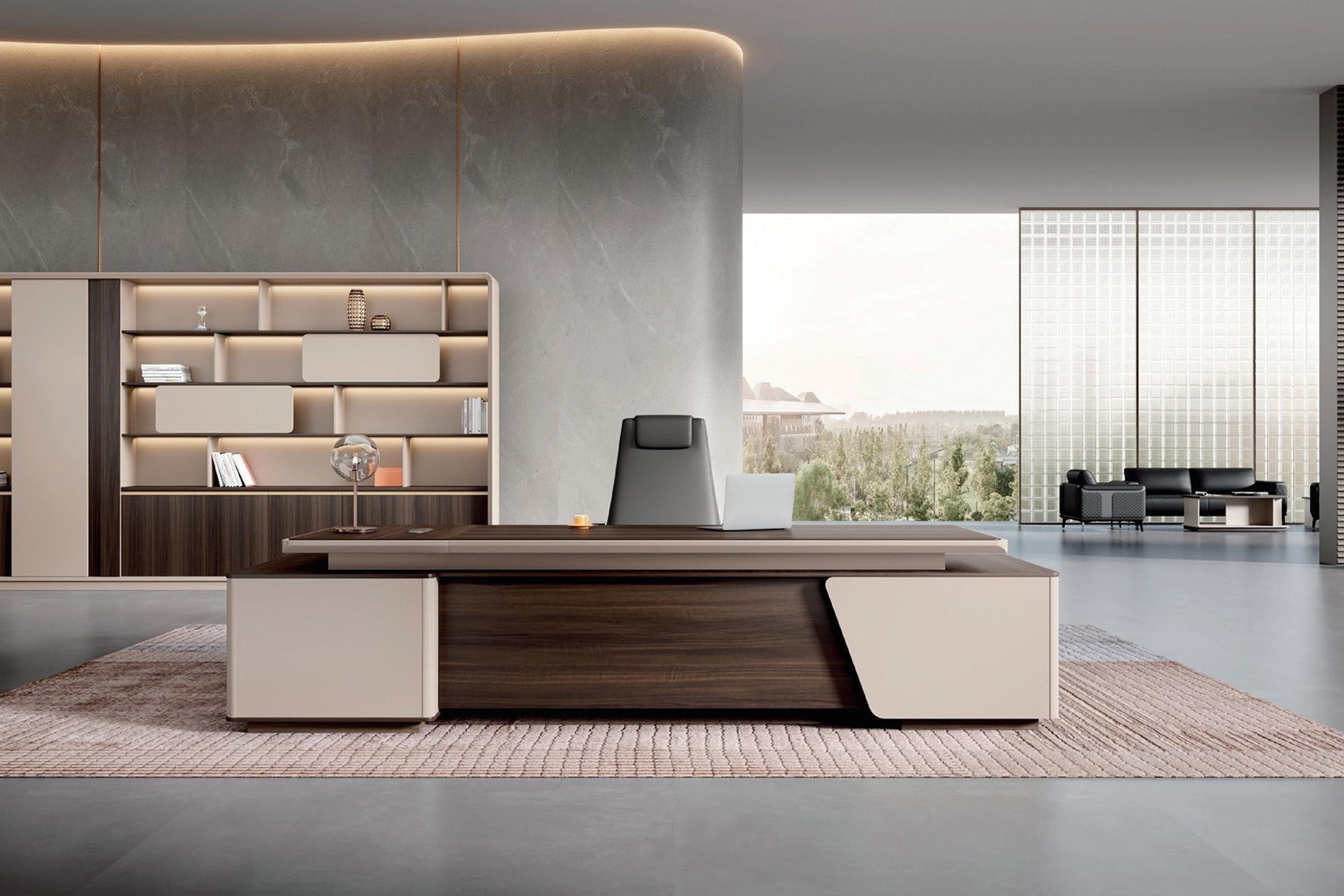



The right desk does more than hold your computer; it defines your workday. Choosing a desk with the appropriate dimensions is the secret to maximizing efficiency and maintaining comfort throughout the day. Ignoring ergonomics can be costly; a desk that doesn't fit your body often leads to slouching, shoulder tension, and back pain. For a healthier, more productive experience, it is suggested to choose an office desk tailored to your physique and workflow.
Basics of Desk Size
Width, Depth, and Height
Desk dimensions are defined by three key measurements: Width, Depth, and Height. Selecting the right combination depends on both your available floor space and specific workflow. For instance, a wider desk provides the necessary space for multiple monitors and documents, while a deeper desk offers more surface area for equipment and better viewing distance. A spacious setup is especially vital for creative professionals who need room to spread out. Finally, height is a crucial ergonomic factor; ensuring your desk sits at the correct level is essential for minimizing strain on your wrists and arms.
Standard Sizes
A standard office desk typically measures about 48 inches in width, 24 to 30 inches in depth, and the standard height sits between 28 and 30 inches. These dimensions generally offer a comfortable setup for standard computer work. However, one size does not fit all. For instance, if you run a dual-monitor setup, you will likely need a wider surface (often 60 inches or more) to accommodate the extra gear. Ultimately, selecting a size that aligns with your specific workflow is the key to building a comfortable workspace.
How to Choose a Desk
Selection Based on Usage
When choosing a desk, it is important to consider the size according to your intended use. For example, if your day involves shuffling stacks of paperwork, you'll definitely want a wider surface to keep organized. However, if you're furnishing a small home office or a tight nook, a compact desk is the smarter choice. It's also important to consider hobbies; tasks like painting, crafting, or gaming often require a much larger, deeper workspace. Ultimately, selecting a size that aligns with your habits is the key to unlocking maximum productivity.
Don't Forget about Storage
When sizing up a desk, you should think beyond just the tabletop. Integrated storage, like drawers, hutches, or open shelving, is essential for corralling paperwork and office supplies. This is especially true in terms of remote work, where your desk often needs to double as a filing cabinet. A cluttered surface kills productivity, so having a dedicated spot for your gear is non-negotiable. Look for a design that balances smart organization with style, so your workspace looks as good as it performs.
Trends in Desk Sizing
The Impact of Remote Work
With remote work becoming the new normal, finding the perfect home office desk is more important than ever. To stay productive at home, size matters. We generally recommend a wider desk to ensure you have ample room for your tech and tasks, especially for remote work. Furthermore, since working from home often happens in spaces shared with family, it's crucial to find a workstation that blends seamlessly into your home decor. Establishing a comfortable environment can significantly boost work efficiency.
Balancing Design and Size
When sizing up a desk, don't overlook the design aesthetic. Simple, stylish desks tend to integrate more easily into existing decor, making the size feel just right for the room. The goal is to find a piece that balances practicality with beauty. This becomes vital when your workspace is visible, such as in a living room nook or an open-plan office. By selecting a desk that fits your style, you create a more comfortable and inviting environment.
Frequently Asked Questions About Desk Sizes
-
How do I choose the size of my desk?
Start by measuring your available floor space and defining your primary workflow. You need to consider three dimensions: width, depth, and height. It's crucial to select a height that matches your body type to ensure a comfortable, pain-free working environment. -
What desk size is suitable for remote work?
For a standard remote work setup, we recommend a width of at least 48 inches. This provides ample room to spread out your computer and documents. Additionally, a depth of 24 inches or more will give you the necessary "elbow room" for comfortable working. -
Why is desk storage important?
Integrated storage, like drawers and shelves, is essential for keeping your workspace clutter-free and efficient. Having a dedicated spot for files and office supplies allows you to stay organized. A clean desktop isn't just about looks; a tidy environment is proven to significantly boost concentration and productivity. -
What is the ideal desk height?
While the industry standard for desk height is 28 to 30 inches, one size doesn't fit all. The goal is to match the desk to your body. Don't forget to factor in your chair! The right combination of desk and chair height is the secret to preventing slouching and maintaining a pain-free, comfortable workflow. -
What is the relationship between desk design and size?
Don't just look at the tape measure; look at the style. A simple, modern desk often takes up less "visual space" than a heavy, solid wood one, even if the measurements are identical. Choosing a design that scales well with your room is how you achieve that perfect mix of form and function, giving you a workspace that works hard but looks great.


