
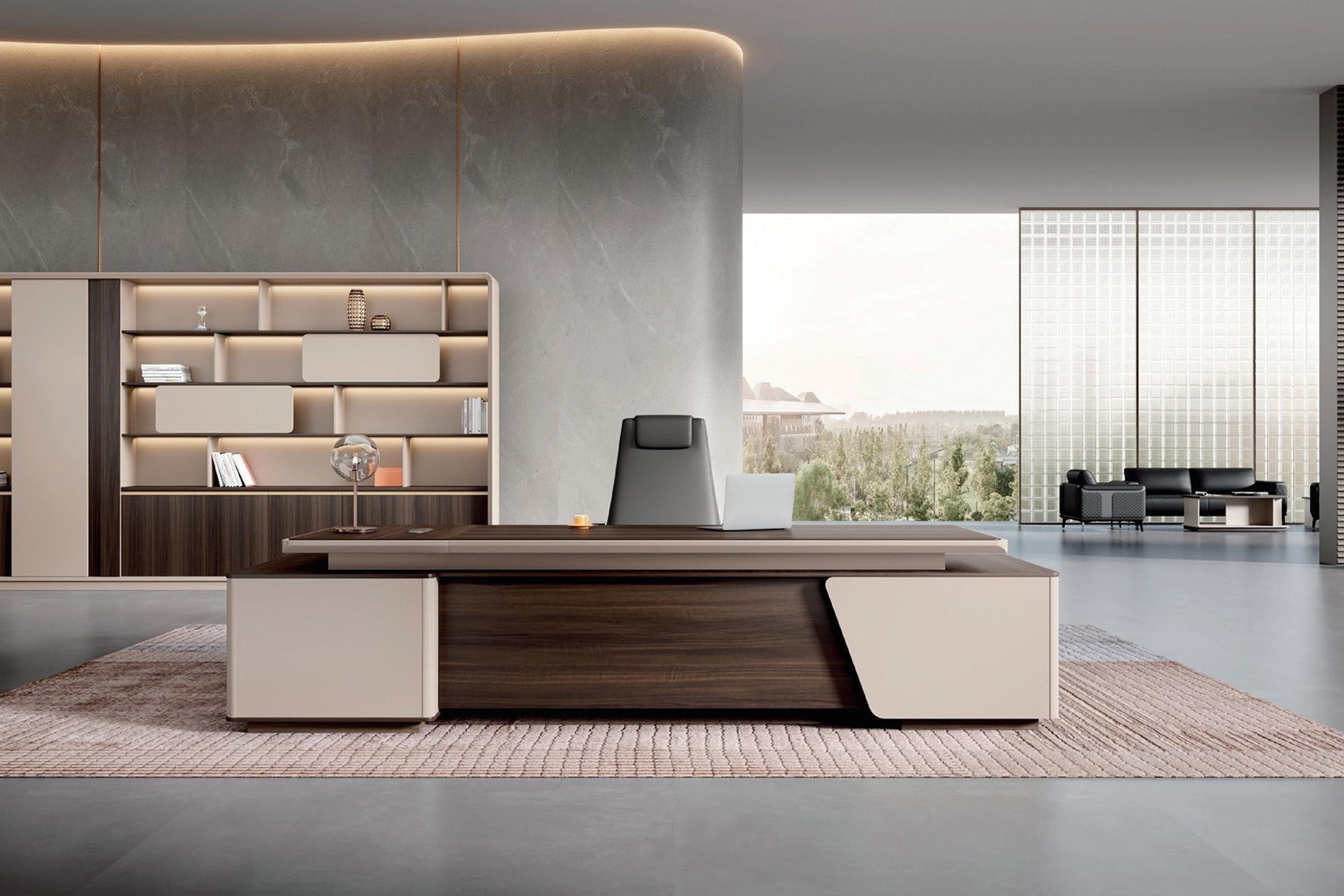



An L-shaped desk is more than just a space-saving furniture choice—it can directly influence how you work each day. By expanding your usable surface and defining clear work zones, this desk style promises better organization and focus. But does it truly improve productivity? Let's break it down.
What is an L-Shaped Desk?
As the name suggests, an L-shaped desk features a distinctive "L" configuration. This design typically features two perpendicular work surfaces joined at a 90-degree angle, making it the perfect fit for room corners. The core design philosophy behind the L-shaped desk is to provide expansive workspace without dominating the room's visual footprint, blending compact aesthetics with high functionality.
Key Advantages of L-Shaped Desks
Expansive Workspace
The most significant benefit of an L-shaped desk is the sheer amount of surface area it offers. Compared to a standard straight desk, the L-shaped design provides two distinct work zones. You can designate one wing for your computer and monitors, and the other for paperwork, reference books, or creative tools. This separation increases usable space and helps you organize your materials more effectively.
Enhanced Efficiency
A larger workspace naturally translates to better workflow. With an L-shaped desk, you can pivot seamlessly between tasks without shuffling items around. For instance, you can type on your keyboard in one zone while reviewing hard-copy documents or taking handwritten notes in the other. This flexibility minimizes friction in your workflow, significantly boosting productivity.
Optimized for Multi-Monitor Setups
For professionals who rely on dual or triple monitors, such as programmers, graphic designers, and data analysts, the L-shaped desk is the perfect choice. The ample surface area accommodates multiple screens with ease, allowing you to keep several windows and applications open simultaneously without feeling cramped.
Ergonomic Benefits
L-shaped desks are designed with human mechanics in mind. The layout allows users to access different work zones by simply swiveling their chairs, reducing strain from reaching or maintaining static postures for too long. Additionally, many high-end models now feature sit-stand height adjustability, further enhancing ergonomic comfort.
Smart Space Utilization
For those with limited square footage, an L-shaped desk is a brilliant solution. They are particularly practical in apartments and small home offices because they maximize the often-underutilized corner space. By tucking the desk into a corner, you free up the center of the room for other furniture or movement.
A Clutter-Free Environment
The design of an L-shaped desk naturally promotes organization. The extra room allows you to spread out and categorize supplies rather than stacking them in unstable piles. This not only speeds up your work but also reduces visual clutter, creating a cleaner, more professional, and stress-free environment.
Potential Drawbacks
While L-shaped desks offer numerous benefits, there are a few considerations to keep in mind before purchasing.
Floor Space Requirements
Although they utilize corners well, L-shaped desks still have a larger physical footprint than compact straight desks. Placing one in a very small room or a space already crowded with furniture can make the area feel tight. Always measure your available floor space carefully.
Limited Placement Flexibility
Once an L-shaped desk is placed, moving it can be a hassle. Unlike a lightweight writing desk that can be easily shifted against different walls, L-shaped desks are often "corner-bound." If you like to rearrange your furniture frequently, this rigidity might be a downside.
Higher Price
Quality L-shaped desks generally cost more than standard desks due to the extra materials and structural support required. While they are a worthy long-term investment for productivity, the initial upfront cost can be a factor for those on a tight budget.
Assembly Complexity
Due to their size and two-part structure, assembly can be more involved than with a standard desk. If you aren't a DIY enthusiast or lack the proper tools, putting it together might be a bit of a challenge (though often worth the effort).
How to Choose the Right L-Shaped Desk
Measure Your Space
Start by accurately measuring your room. Ensure the desk fits not only against the walls but also leaves enough clearance for your chair to swivel and roll freely.
Assess Your Workflow
Analyze your daily tasks. How much room do you need for your monitors? do you need under-desk storage for a file cabinet? Choose a desk configuration that aligns with your specific equipment and storage needs.
Prioritize Ergonomics
Consider an L-shaped desk with adjustable height capabilities (standing desk). This feature is invaluable for reducing physical fatigue during long workdays.
Match Your Aesthetic
Your desk is the centerpiece of your office. Choose a finish and style, whether industrial metal, warm wood, or modern white, that harmonizes with your existing decor to create a space you enjoy being in.
Budget
While staying within budget is important, it is crucial to remember that a high-quality desk is a long-term investment in your career and health.
Conclusion
There is no doubt that an L-shaped desk can significantly enhance productivity and comfort. It offers superior workspace, facilitates multitasking, and optimizes corner layouts.
If you have the space and require a setup that handles multiple devices or complex workflows, an L shaped desk is an excellent choice that fosters a professional and efficient environment. However, if your room is extremely tight or you prefer frequent layout changes, a common office desk might suit you better.
All in all, the best desk is one that fits your unique work style. By carefully weighing your needs, measuring your space, and considering the pros and cons, you can find the perfect workstation to power your day.


