
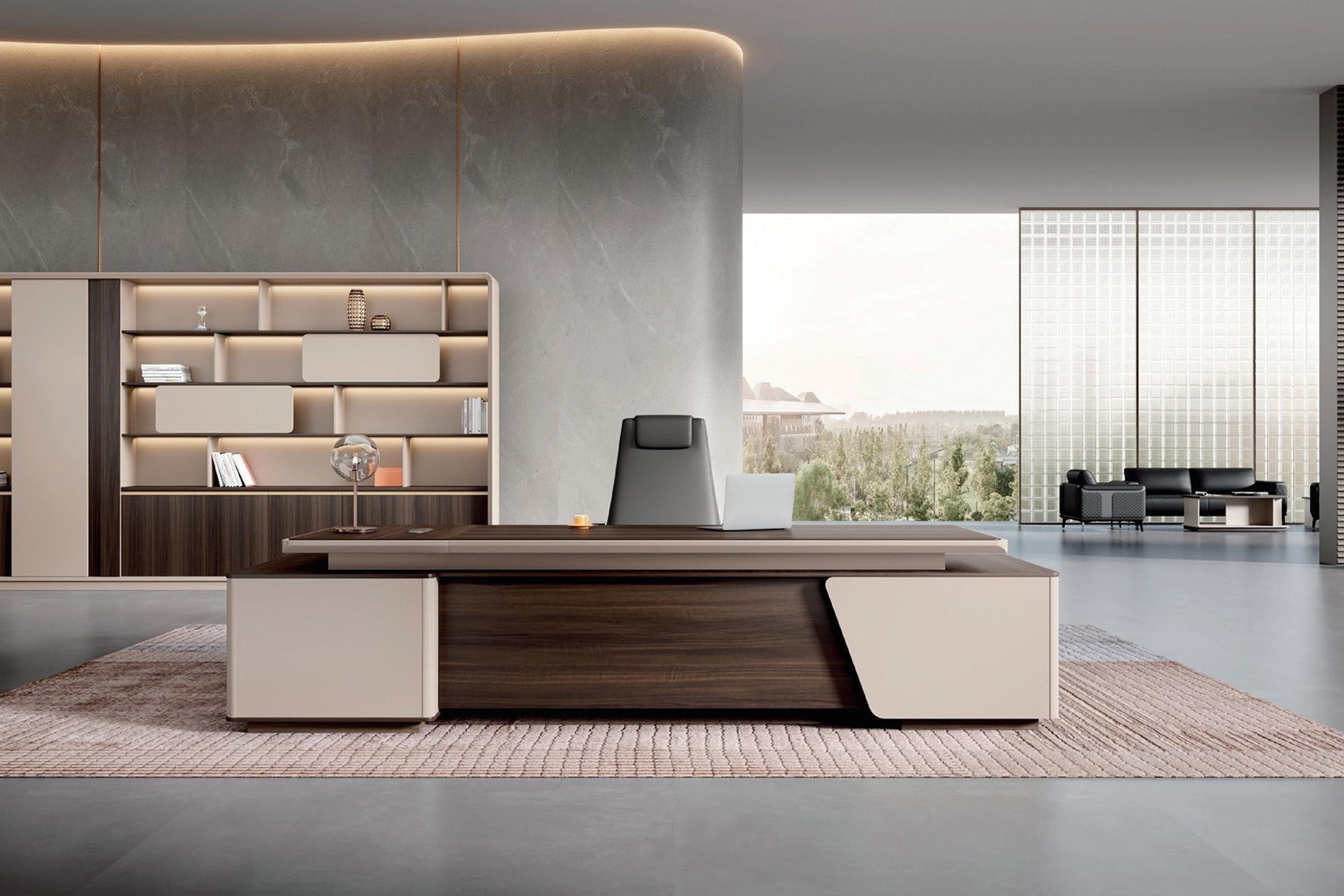


As remote work, hybrid offices, and flexible workspaces continue to grow, many buyers find themselves asking the same question: what’s the real difference between commercial office furniture and home furniture?
At first glance, the two can look surprisingly similar. Desks, chairs, storage cabinets—many designs overlap. But beneath the surface, commercial and home furniture are built for very different purposes. Understanding these differences can help you make smarter decisions for comfort, safety, and long-term value.
In this guide, we’ll break down what commercial office furniture and home office furniture are, how they differ, and how to choose between them, so you can confidently choose the right option for your workspace.
What Is Commercial Office Furniture vs Home Furniture?
The main difference between commercial office furniture and residential (home) furniture lies in how and where it is used.
Commercial office furniture is designed for professional environments such as corporate offices, co-working spaces, conference rooms, and reception areas. These products are built to withstand continuous daily use by multiple users, often for 8 hours a day or longer.

Home furniture, also known as residential furniture, is designed for personal use in living rooms, bedrooms, or home offices. While it may look stylish and feel comfortable, it is generally intended for lighter, less frequent use.
This distinction between commercial vs residential furniture is not about appearance—it‘’s about performance, standards, and longevity.

Key Differences Between Commercial Office Furniture VS Home Furniture
When comparing corporate office furniture and residential furniture, the most important differences show up in durability, safety, ergonomics, and long-term cost. Let’s take a closer look.
Durability and Daily Use
This is one of the biggest differences. Commercial furniture is engineered for heavy, repetitive use. Office desks are built with stronger frames, reinforced joints, and materials that resist warping, scratches, and wear. Office chairs are tested to support higher weight capacities and constant movement throughout the workday.
Home furniture, by comparison, is usually designed for occasional or moderate use. The desk or chair works well for a few hours of computer time, but may not hold up under full-time professional workloads.
If you are choosing furniture for daily work and for employees or clients, durability quickly becomes a deciding factor.
Safety and Compliance Standards
Commercial office furniture is often required to meet specific safety and performance standards. These may include requirements related to stability, fire resistance, and structural integrity—especially in shared or public spaces.
Home furniture typically does not need to meet the same level of compliance, since it is used in private environments, but this doesn’t mean residential furniture is unsafe. It does mean it may not be suitable for offices, schools, or commercial buildings where safety regulations matter.
Design and Ergonomics
Another major difference between home furniture and commercial furniture is ergonomics.
Commercial office furniture is designed to support productivity and long working hours. Adjustable desks, ergonomic chairs, and modular systems allow users to customize height, posture, and layout for comfort and efficiency.
Home furniture tends to prioritize aesthetics and general comfort over adjustability. While it may look great in a living space, it often lacks the ergonomic features needed for extended work sessions.
For full-time work environments, ergonomics directly affect employee well-being and performance.
Warranty and Long-Term Value
At first glance, home furniture often appears more affordable. However, commercial furniture is designed with long-term value in mind.
Commercial products usually come with longer warranties and are built to last for years under demanding conditions. When you factor in replacement frequency, maintenance, and downtime, the cost per year of commercial furniture is often lower than that of residential alternatives.
This is why many businesses view commercial furniture as an investment rather than an expense.
Common Misconceptions About Commercial Office Furniture
There are a few myths that often come up when comparing commercial furniture and residential furniture. These misunderstandings might stop you from choosing the most suitable one for work.
1. Commercial furniture is bulky or unattractive.
Modern office furniture designs are getting cleaner, more stylish, or minimal. We also provide customized ones in size, color, and configuration, making them indistinguishable from residential styles.
2. It’s only for large corporations.
That’s the biggest misconception. Nowadays, many small businesses, startups, and home offices increasingly choose commercial furniture for its durability and ergonomic benefits.
3. Home furniture is always cheaper.
While home furniture often has a lower upfront cost, it may not be the most economical choice over time. For example, imagine spending $100 on a basic writing desk that breaks after six months of daily use. In comparison, investing $500 in a higher-quality commercial office desk that lasts 5 years or longer can actually result in a lower cost per year—and far fewer replacements.
Understanding these misconceptions can help buyers make more informed decisions.
Home Office Furniture vs Commercial Office Furniture: Which Should You Choose?
Choosing between home office furniture and commercial furniture depends largely on how the space will be used, not just the budget.
You may want to choose commercial office furniture if:
- The workspace is used daily for full-time work.
- Multiple people use the same desks or chairs.
- The office is client-facing or part of a business operation.
- Durability, safety, and ergonomics are priorities.
Home furniture may be better if:
- The space is used occasionally.
- The workload is light and temporary.
- Design and style are more important than long-term performance.
For many remote workers and small businesses, commercial-grade furniture offers better comfort and reliability—even in a home office setting.
Final Thoughts: Commercial vs Home Furniture
The difference between commercial office furniture and home furniture comes down to purpose. Commercial furniture is built for performance, safety, and long-term use, while home furniture is designed for comfort and style in personal spaces.
If you’re planning a professional office, shared workspace, or full-time home office, commercial-grade furniture is often the smarter long-term choice.
To make the differences even clearer, here’s a quick side-by-side comparison of commercial and home office furniture across the most important factors buyers consider.
|
Feature |
Commercial Office Furniture |
Home Office Furniture |
|
Intended Use |
Offices, businesses, shared workspaces |
Personal and residential use |
|
Daily Usage |
Designed for 8+ hours per day |
Light to moderate daily use |
|
Durability |
Heavy-duty materials and reinforced structure |
Lighter construction |
|
Safety Standards |
Often meets commercial safety and performance standards |
Fewer or no commercial compliance requirements |
|
Ergonomics |
Adjustable, productivity-focused design |
Limited adjustability |
|
Warranty |
Longer warranties for long-term use |
Shorter warranties |
|
Long-Term Cost |
Lower cost per year over time |
Higher replacement frequency |
|
Best For |
Businesses, full-time work, shared offices |
Occasional home office use |


