

Office Furniture Planning Checklist for New Businesses
Launching a new venture is a monumental task that requires balancing vision with fiscal responsibility. Among the most critical physical manifestations of your company culture is your office environment. Research consistently shows that workspace design directly impacts employee retention, mental well-being, and overall operational efficiency.
However, furnishing an office is more than just buying desks and chairs; it is about creating a functional ecosystem. For a new business, every square foot must justify its cost. This guide provides an exhaustive checklist to ensure your furniture investment supports your long-term success.
1. Spatial Analysis and Workflow Mapping
Before looking at furniture catalogs, you must understand the "geometry" of your productivity. A common mistake for new businesses is over-furnishing, which creates a cramped, high-stress environment.
- The Baseline Measurement: Obtain an accurate CAD or architectural floor plan. If you are converting metric measurements, ensure your conversions to imperial units are precise (e.g., a standard $1600mm$ desk is approximately $63$ inches).
- The 60/40 Rule: Aim for a balance where 60% of the space is dedicated to functional furniture and 40% remains open for "circulation" (walking paths and airiness).
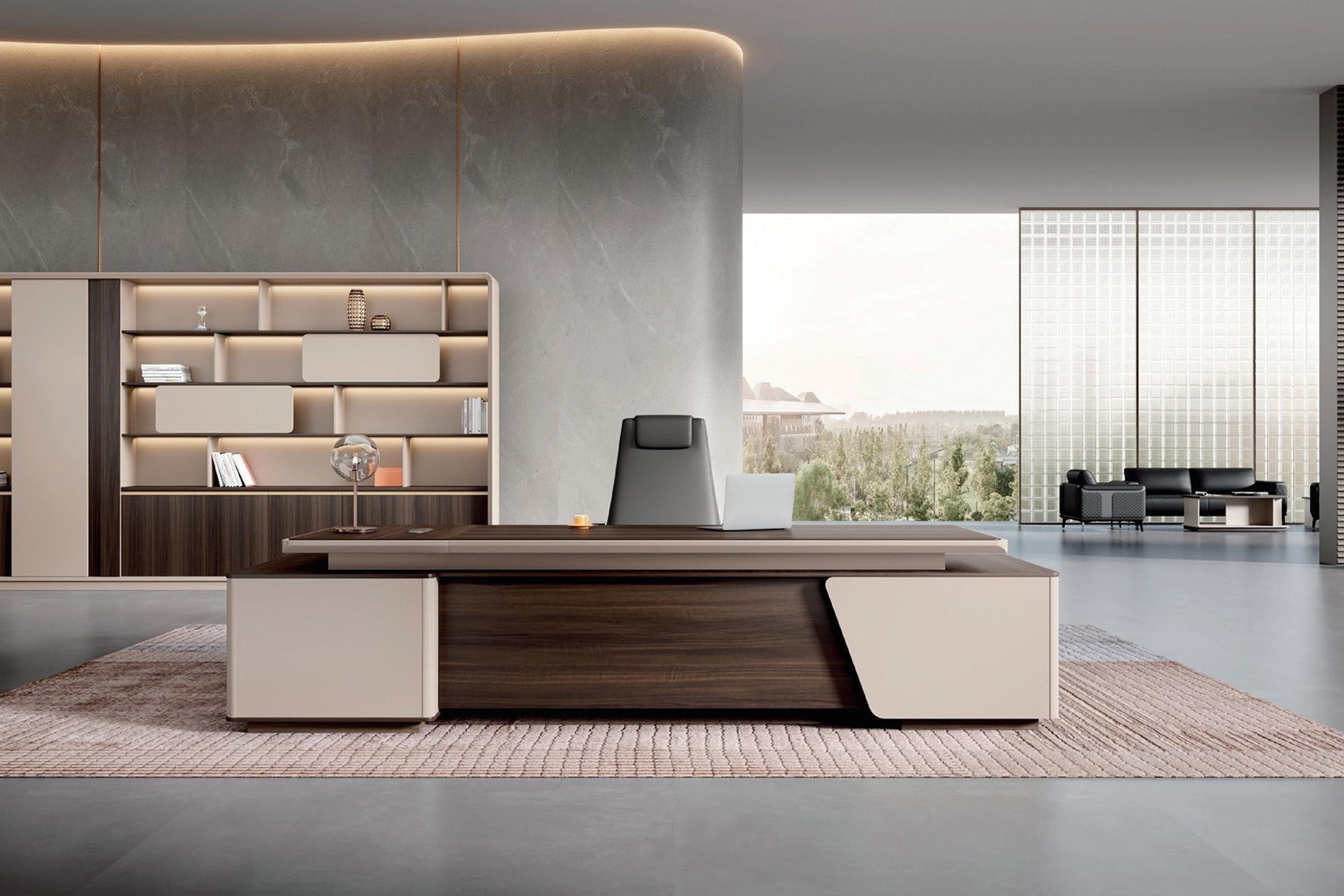
- Zonal Planning: * The Focus Zone: Standard workstations or L-shaped executive desks for deep work.
- The Interaction Zone: Open-plan benching or 120-degree triple workstations that encourage quick communication.
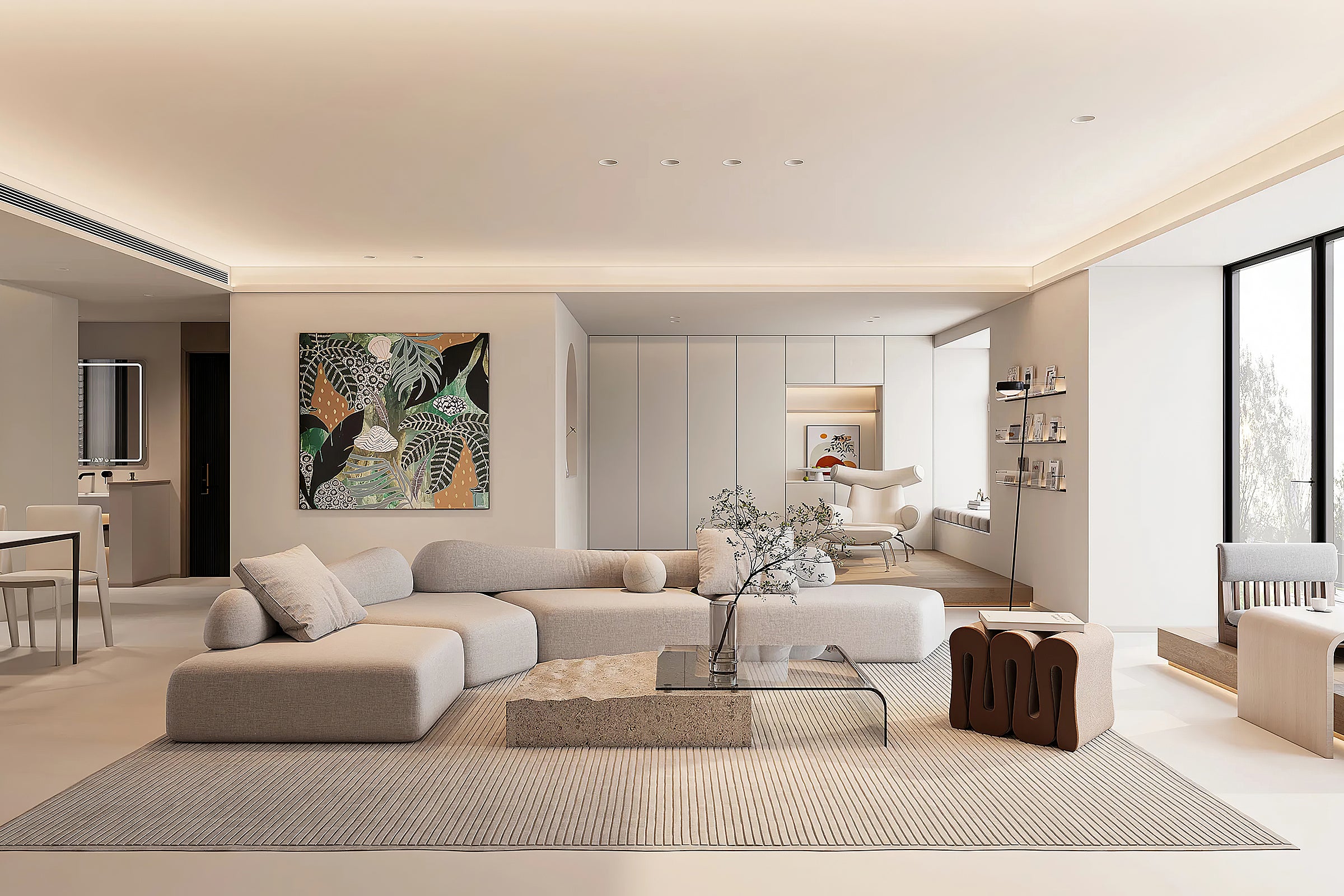
- The Rejuvenation Zone: Lounges featuring bouclé sofas or minimalist ottomans to allow the brain to reset.
- The Impression Zone: A reception area that reflects your brand’s authority.
2. Prioritizing the "Human Element": Ergonomics
For a new business, your team is your most expensive asset. Chronic back pain or carpal tunnel syndrome are preventable "hidden costs" that result from poor furniture choices.
- The Sit-Stand Revolution: Static desks are becoming obsolete. Incorporate height-adjustable desks with dual-motor systems for smooth, quiet transitions. A desk that moves from $72cm$ ($28.3"$) to $115cm$ ($45.3"$) allows employees to stay active, increasing blood flow and cognitive function.
- The Task Chair Investment: If you must cut costs, do not do it here. An elite ergonomic chair should offer:
- Synchro-tilt mechanisms that follow the body’s natural movement.
- Adjustable lumbar depth to support the lower spine.
- 4D Armrests that adjust for height, width, depth, and angle to prevent shoulder strain.
- Monitor Arms: These are essential for clearing desk clutter and ensuring screens are at the correct physiological height, reducing neck "tech-neck" strain.
3. Brand Alignment and Aesthetic Cohesion
Your office is a 3D business card. For modern startups, two styles currently dominate the high-end market: Japandi and Italian Minimalism.
- Japandi (Japan + Scandi): Focuses on light woods (oak, ash), organic textures, and a "wabi-sabi" appreciation for simplicity. It creates a calm, focused atmosphere perfect for creative agencies.
- Italian Minimalism: Characterized by sleek silhouettes, high-end laminates, and hidden structural elements. This style communicates sophistication and precision, ideal for law firms or tech consultants.
- Color Psychology: Use neutral tones (greys, beiges, whites) for large surfaces to ensure longevity, then use "brand pops" in accent chairs or acoustic panels to inject energy.
4. Technical Integration and Power Access
A beautiful desk is useless if a tangle of wires ruins its aesthetic or if an employee cannot find a plug.
- Integrated Power Hubs: Select conference tables with "flip-top" power boxes featuring USB-C, HDMI, and standard AC outlets.
- Invisible Cable Management: High-end desks should feature vertical wire snakes or magnetic cable channels that run down the inside of the desk leg.
- Acoustic Management: In open-plan offices, sound travels fast. Use PET-felt desk dividers or freestanding acoustic pods. These "soft" furniture elements are vital for privacy in a world of constant Zoom calls.
5. Storage: From "Bulk" to "Smart"
The "paperless office" is a goal, but rarely a 100% reality. New businesses need smart storage that doesn't feel like a 1990s filing room.
- Mobile Pedestals: Low-profile cabinets on wheels that can slide under a desk or serve as an extra seat for a quick collaboration.
- Credenzas and Sideboards: Use these in meeting rooms to hide AV equipment or coffee service supplies.
- Locker Systems: In "hot-desking" environments, assigned lockers give employees a sense of belonging and a place to secure personal items.
6. Scalability and Modular Flexibility
As a new business, your headcount in Month 12 will likely be different from Month 1.
- Modular Benching: Choose systems that allow you to add "extension kits" to existing rows of desks rather than buying entirely new units.
- Folding and Nesting: For training rooms or multi-purpose spaces, use nesting tables on casters that can be folded and pushed to the perimeter in minutes.
- The "Pod" Strategy: High-back sofas or acoustic "booths" provide instant private meeting rooms without the cost of permanent construction (drywall and permits).
7. Procurement and Lifecycle Costing
New business owners often look at the sticker price, but professional planners look at the lifecycle cost.
- Commercial Grade vs. Residential: Never buy residential furniture for an office. It is not rated for 40+ hours of weekly use and will fail within a year. Look for BIFMA-certified products.
- Warranty Awareness: Aim for a 5-to-10-year warranty on structural components and 3 years on textiles/motors.
- Lead Time Management: High-quality, customizable furniture often has a 6-to-10 week lead time. Ensure your furniture order is placed at least two months before your "Grand Opening" date.
The New Business Furniture Checklist (Summary)
|
Category |
Essential Action Item |
Why It Matters |
|---|---|---|
|
Foundation |
Professional Floor Plan & Metric/Imperial Conversion |
Avoids ordering furniture that doesn't fit the "flow." |
|
Well-being |
Dual-Motor Sit-Stand Desks |
Increases productivity and reduces long-term health costs. |
|
Aesthetics |
Selection of Japandi or Italian Minimalist Themes |
Builds brand authority and attracts top-tier talent. |
|
Technology |
Under-desk Cable Trays & Desktop Power Hubs |
Maintains a clean, professional, and functional "wireless" look. |
|
Privacy |
Acoustic PET Dividers & Phone Booths |
Essential for focus in open-office layouts. |
|
Growth |
Modular Benching & Mobile Storage |
Ensures the office can expand without total redesigns. |
Conclusion: Designing for the Future
The furniture you choose for your new business is a silent partner in your success. It defines how your team interacts, how your clients perceive your stability, and how your employees feel at the end of a long day.
By prioritizing ergonomics, modular scalability, and integrated technology, you are not just buying "stuff"—you are building a platform for innovation. Start with the core essentials: a world-class chair, a versatile sit-stand desk, and a spatial plan that allows for both focus and flow. As your business grows, your furniture should be able to grow with you.


