
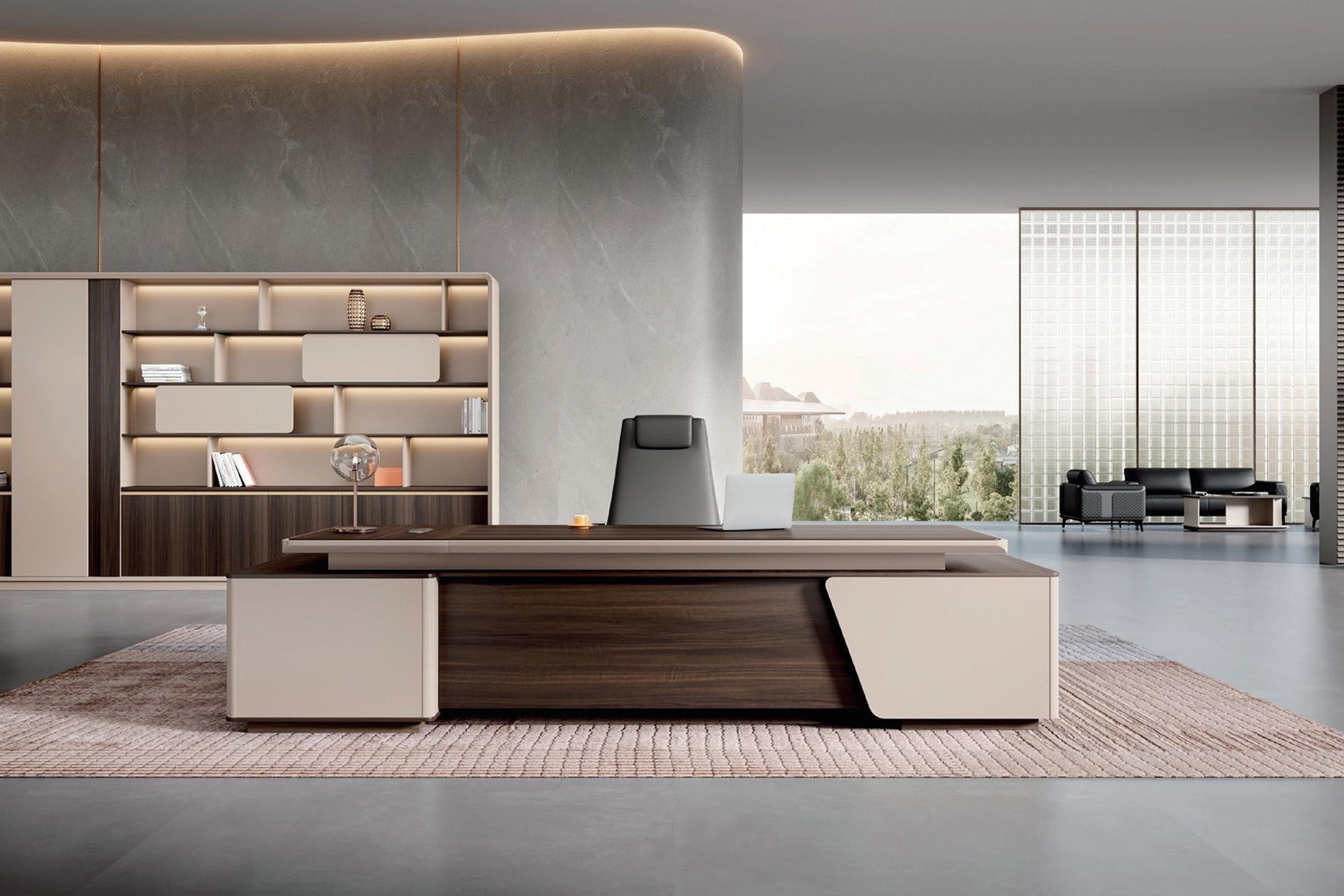

The "office" isn’t what it used to be. A decade ago, it was a sea of gray cubicles and heavy mahogany desks that required a team of four to nudge an inch to the left. Today, the walls are coming down—literally and figuratively. As our work habits have shifted toward hybrid schedules, collaborative sprints, and "Zoom rooms," our furniture has had to evolve.
Enter modular office furniture. It’s the Lego set of the adult professional world. It’s sleek, it’s adaptable, and it’s designed for a world that refuses to stand still. But is it the right choice for your specific space? Let’s pull back the curtain on the building blocks of the modern workspace.
The Allure of the "Lego" Office: The Pros
The rise of modularity isn't just a design trend; it’s a response to the chaotic pace of modern business. Here is why companies—from garage startups to Fortune 500s—are obsessed with it.
- Unmatched Flexibility
The primary selling point is right in the name: modularity. These pieces are designed to be disassembled, rearranged, and expanded. Need to turn a quiet corner into a three-person brainstorming hub by Tuesday? With modular desks and privacy screens, you can. It allows your office to grow (or shrink) without a massive capital reinvestment.
- Cost-Effectiveness Over Time
While the initial investment might be comparable to that of traditional furniture, the long-term ROI is where modular furniture shines. Instead of buying entirely new sets when you hire five more people, you simply buy five more matching "modules." You aren't replacing; you’re adding.
- Spatial Efficiency
Traditional furniture is often bulky and "fixed." If it doesn't fit the awkward alcove in your new suite, it goes to the landfill. Modular pieces are designed with a smaller footprint and can be configured to snake around corners, tuck under windows, or stack vertically to maximize every square inch of expensive real estate.
- Aesthetic Consistency
There is nothing more soul-crushing than a "Frankenstein" office—one where the desks don't match, the chairs are different heights, and the storage units belong to different decades. Modular systems ensure that as you scale, your office maintains a cohesive, professional "vibe" that impresses clients and keeps employees feeling grounded.
The Reality Check: The Cons
Nothing is perfect, and even the most versatile furniture has its "pain points." Before you swap out every desk, consider these hurdles.
- The "Assembly Required" Fatigue
While modular furniture is meant to be moved, it isn't always easy to move. Many systems require specific tools or a fair bit of "IKEA-level" patience. If you aren't handy—or don't want to pay a professional installation team every time you rearrange the floor plan—the "flexibility" can start to feel like a chore.
- Durability Concerns
To keep things lightweight and movable, some modular furniture uses composite materials like particle board or thinner aluminum. While high-end brands are sturdy, budget-friendly modular options might not withstand the "wear and tear" of a bustling office as well as a solid oak desk from the 1950s would.
- The Complexity of Choice
Sometimes, having too many options is a curse. When you can build anything, you might end up building nothing functional. Designing a modular layout requires a bit of spatial intelligence. Without a clear plan, you can end up with a cluttered, confusing maze that hinders movement rather than helping it.
- Lead Times and Discontinuation
This is the "hidden" con. If you buy a specific modular line today and decide to expand in three years, there is a risk that the manufacturer has discontinued that specific color or connector style. Suddenly, your "seamless expansion" requires a hunt on secondary markets.
Best Use Cases: Where Modular Truly Shines
Not every space needs a modular overhaul. However, in these three scenarios, it is arguably the only logical choice.
The "High-Growth" Startup
If you’re a team of five today but plan to be fifty by next Christmas, do not buy fixed furniture. You need a system that can evolve with your headcount. Modular desks allow you to start with a "lean" setup and add modules as the venture capital rolls in.
The Hybrid Home Office
Many of us are working from spare bedrooms or living room corners. A modular desk that can convert from a sitting position to a standing one—or a shelving unit that doubles as a room divider—is essential for maintaining the "work-life" boundary in a small footprint.
Collaborative "Agile" Workspaces
In creative agencies or tech firms, the work often dictates the furniture. On Monday, you might need a long, communal table for a sprint. On Friday, you might need individual "focus pods" for deep work. Modular partitions and mobile nesting tables make this transition possible in minutes.
How to Choose: A Quick Comparison Table
|
Feature |
Traditional Furniture |
Modular Furniture |
|
Longevity |
Very High (Built to last) |
High (Built to adapt) |
|
Installation |
One-and-done |
Recurring (as needed) |
|
Customization |
Low |
Extremely High |
|
Style |
Classic / Heavy |
Modern / Lightweight |
|
Scalability |
Difficult |
Seamless |
Pro-Tips for the Modular Buyer
If you’re ready to take the plunge, keep these three rules in mind to avoid "buyer's remorse":
- Prioritize Power Management: The biggest headache in a modular office is cables. Look for systems with built-in "raceways" or "troughs" so that when you move the desk, you aren't untangling a web of power strips.
- Stick to Neutral Palettes: You might love "Electric Lime" today, but will you love it when you have 40 desks in that color? Stick to whites, grays, or wood tones for the modules, and add "pop" with chairs or accessories.
- Invest in Quality Casters: If you plan on moving things frequently, ensure the wheels (casters) are heavy-duty and lockable. Cheap wheels will mar your floors and make "rearranging day" a nightmare.
Conclusion
Modular office furniture isn't just about "neat desks." It’s about future-proofing. It’s an acknowledgment that we don't know exactly what the world will look like in two years, but we know we'll still need a place to sit, think, and create.
By choosing pieces that can pivot as quickly as your business does, you aren't just buying furniture—you're buying the freedom to change your mind. And in the modern economy, that might be the most valuable asset of all.


